Do we need to sketch in the age of digital photography?
Oct 14, 2018
Before we get into the role of sketching, let’s first define what we are referring to by “sketching.”
Semantics suggest that sketching refers to drawings done quickly. But how quickly is quick, and how slowly is slow? The definitions can be hazy and not black and white. Is sketching all about lines and becomes drawing if you add value? Does adding in the background and a theme disqualify it as a sketch? This is probably not the case. Among Repin and Menzel’s sketches, some had backgrounds and others did not. Wu Daozi’s Birth of Gautama Buddhaand Wu Zhongyuan’s Celestial Beings Worshipping Lao Ziwere all line drawings. Are they sketches or not? Sketching is therefore not easy to define and can’t be quantified in terms of time. In my own experience, life drawing that does not take more than one hour can be considered sketching. Basically, all sketches share one common characteristic – conciseness. It can be described as a sense of relief much like how “swiftly the boat sails past ten thousand mountains” and “soon past Xianyang and on the way to Luoyang” in Tang poems.
Before the invention of camera, sketching was the main tool to record life and observation. The great masters have left behind countless breathtaking drawings since the Renaissance. Most of these drawings were studies for original oil paintings and frescoes. Da Vinci, Michelangelo and Raphael in particular produced drawings characterized by having well-defined subjects, distinctive features and smooth lines. These early sketches were all relatively modest in size.
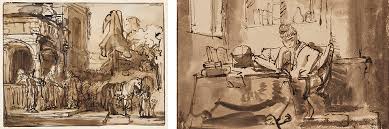
Rembrandt pioneered the use of sketches to record scenes from everyday life such as people at the bottom of society or country scenery. Etchings, brush and ink were used to create an extensive record of Dutch society at the time.
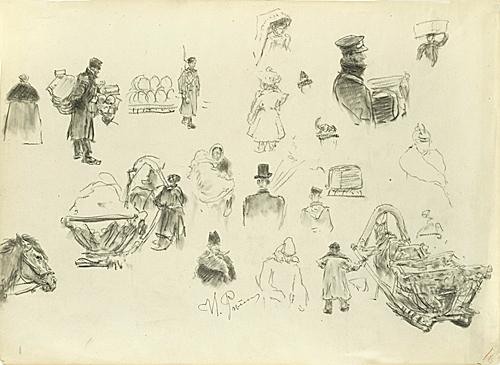
The most outstanding practitioners of sketching in 19thCentury Europe were Menzel of Germany and Repin in Russia. Even today, their lifelike portrayal of the subjects and elegance of technique has few peers in the art world. Back then, the art community lived in an age of geniuses. Serov in Russia, Grigorescu in Romania, Sargent in the U.S., Millet and Lautrec in France, Klimt in Austria and Schiller in Germany were all famed for their sketching and left behind some of the world’s greatest treasures for posterity.
Ilya Yefimovich Repin – Studies for Figures on the Nevsky Prospect in St. Petersburg
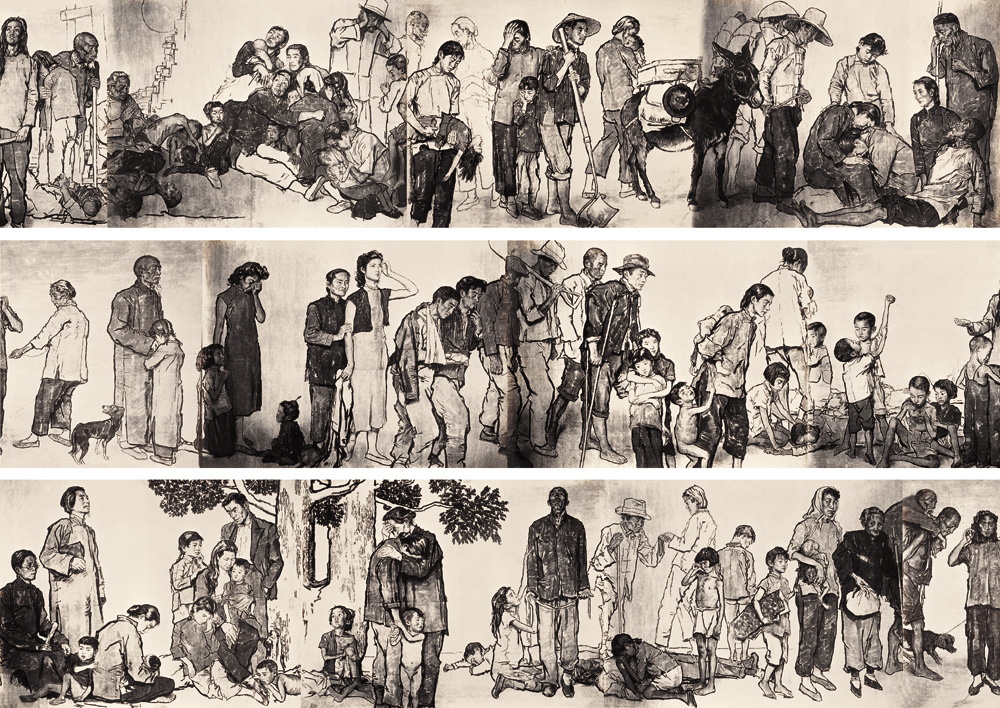
The Chinese figure painter Jiang Zhaohe created the large-scale figure painting Refugeesduring the war against Japan’s invasion. The refugees in the drawing were all remodeled based on past sketches and Jiang’s figure paintings in ink were stylistically similar to sketching as well.
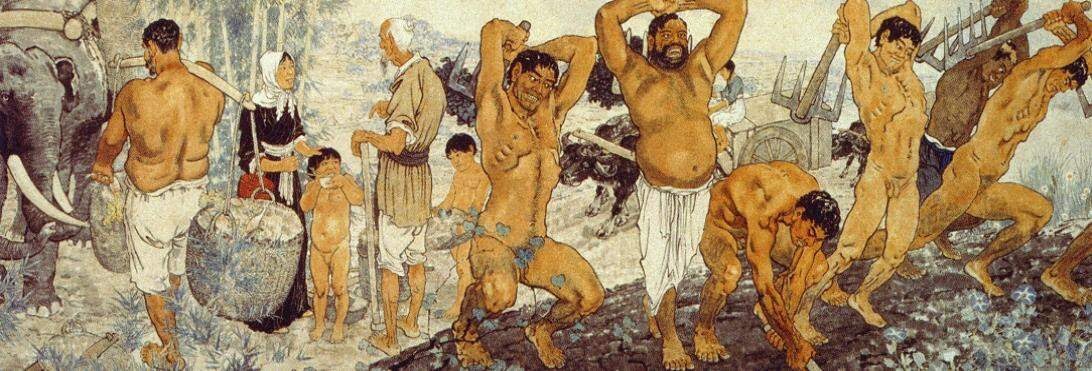
Xu Beihong left behind many sketches. The large body of nude sketches he drew during his time as student in France already showed a high level of maturity in technique and composition. The dynamic figure sketches he made in preparation for The Foolish Old Man Who Removed the Mountainsduring his visit to India leaves a particularly strong impression.
How the Foolish Old Man Moved Mountains by Xu Beihong
China has produced many talented artists in sketching in the past few decades as well. The first among equals was naturally Huang Zhou. Huang’s Man Blowing Suo-naand kneeling Tibetan Girlin the 1950’s touched the hearts of many while Chunlanin the 1960’s became a classic among figure sketches.
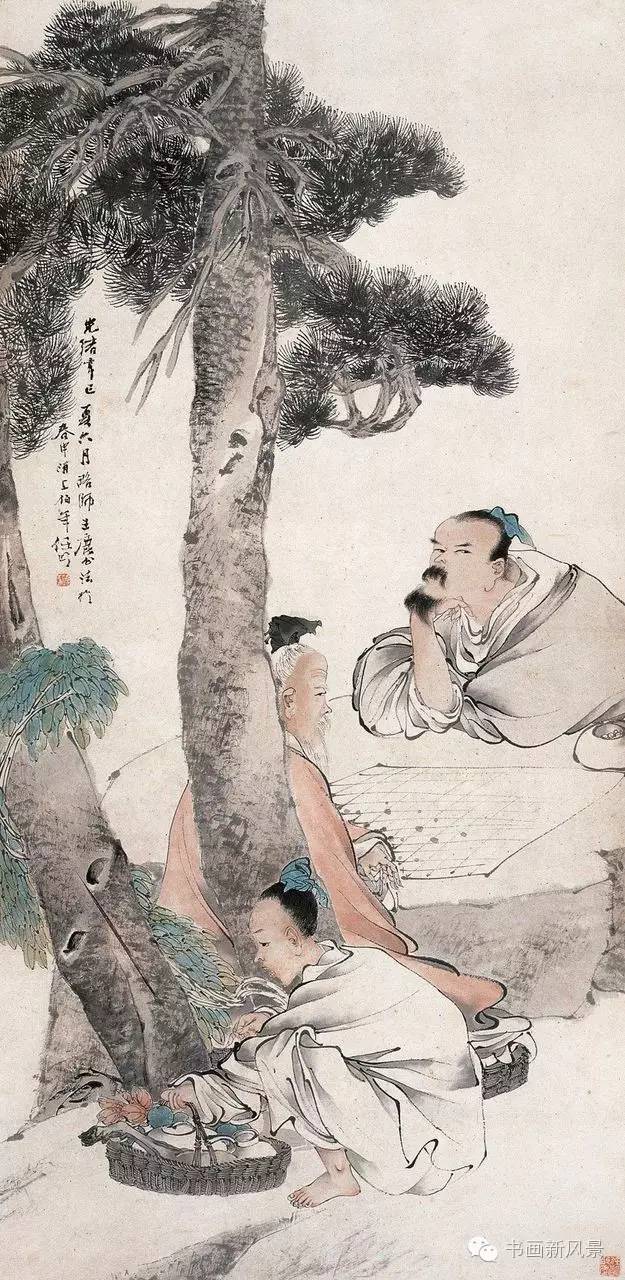
The traditional emphasis on lines in Chinese painting had a direct influence on sketching by Chinese artists. Many Chinese paintings themselves seem to be a refined form of sketching. Ren Bonian, the great master of Chinese paintings from the late Qing Dynasty was an excellent example of this. Ren’s characters, flowers and birds were unique in their varied poses and different perspectives. The minimalist lines captured the life of the subjects and regardless of their dimensions, the paintings all left the beholder in awe: “These characters, flowers and birds are actually sketches!” The fusion of sketching with rich imaginations can therefore be said to be the aesthetic essence of Chinese paintings.
If you practice representational art, if you aspire to create studio paintings based on story telling be it of contemporary or historical themes, sketching skills are key to rendering your imagination on paper or canvas.
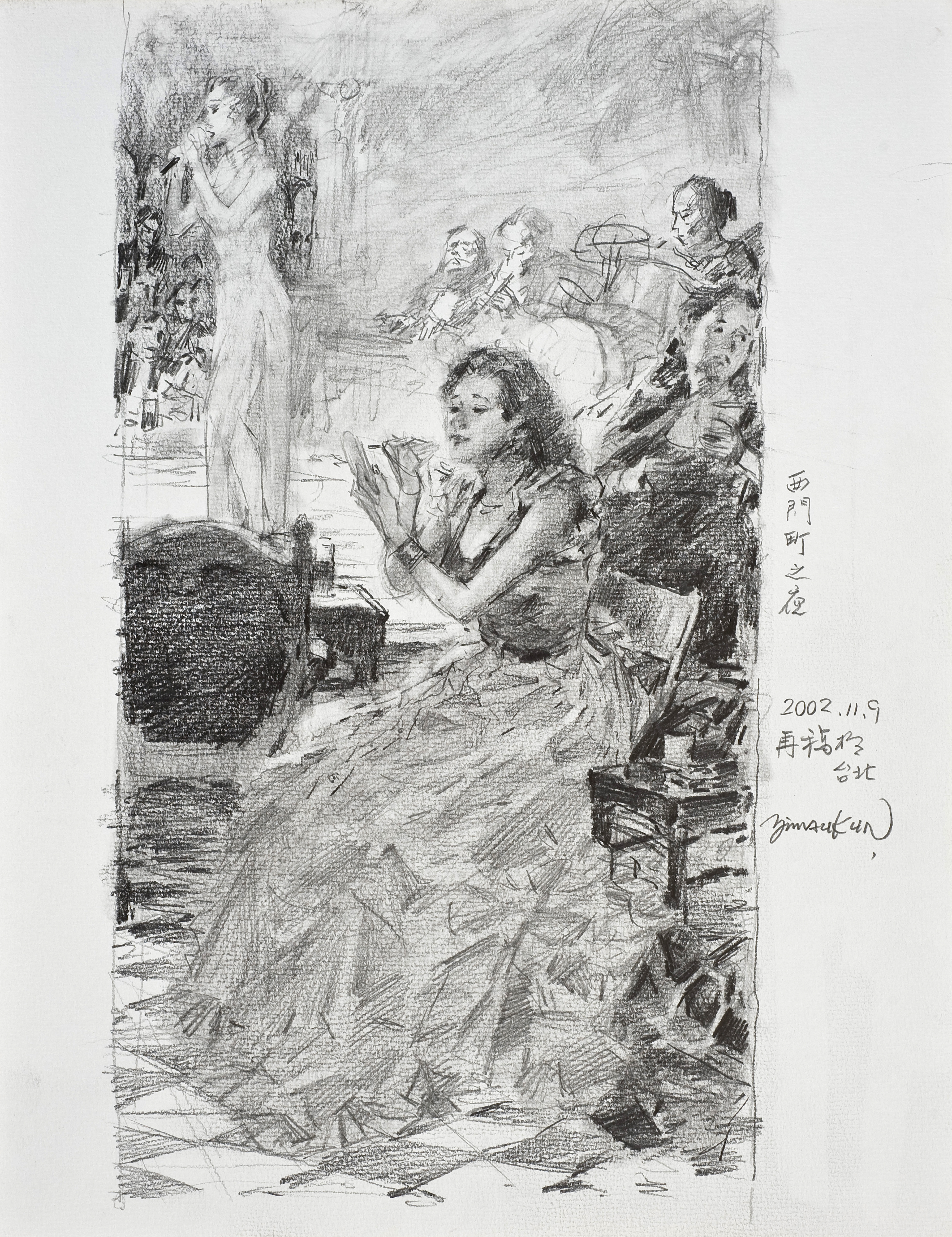
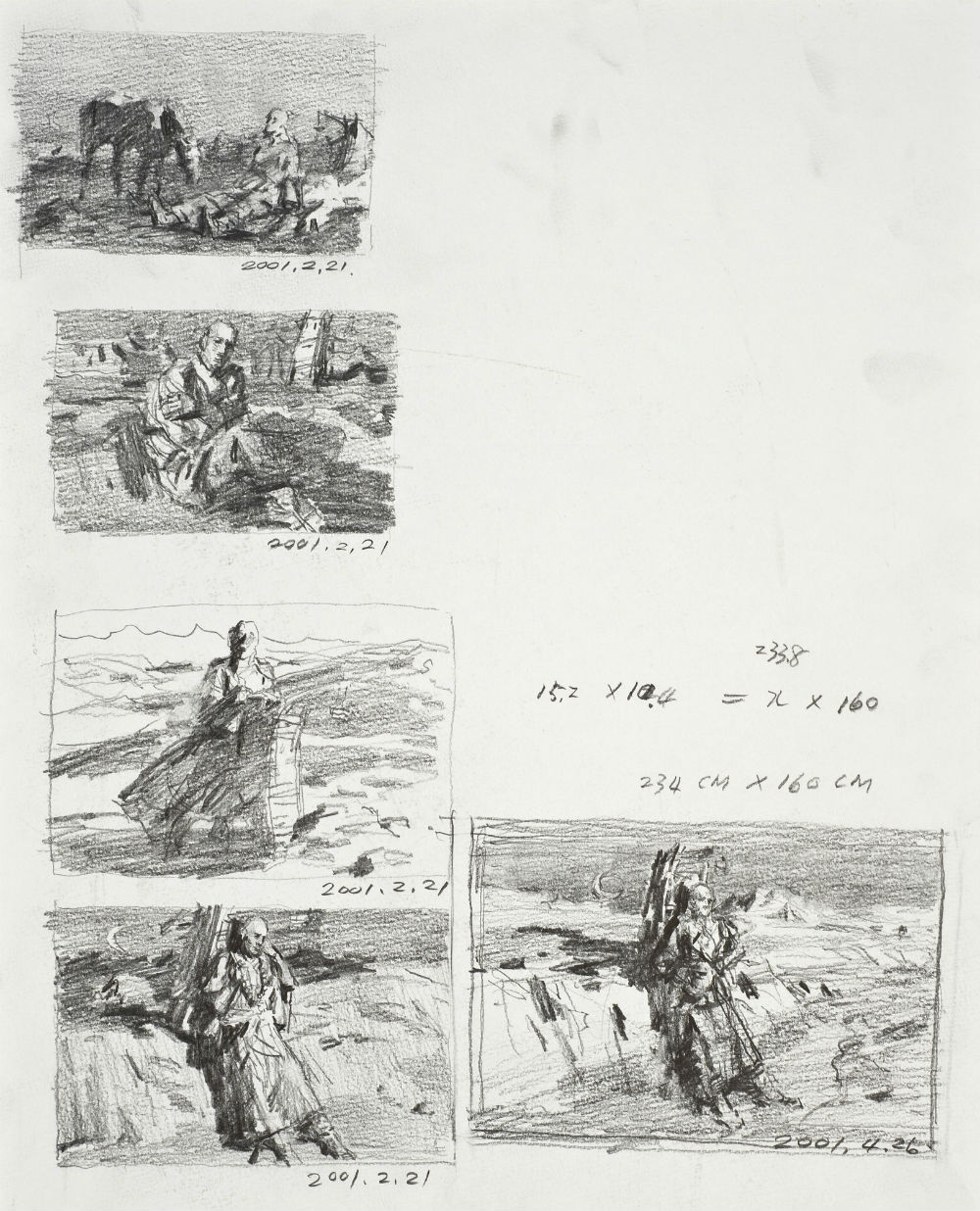
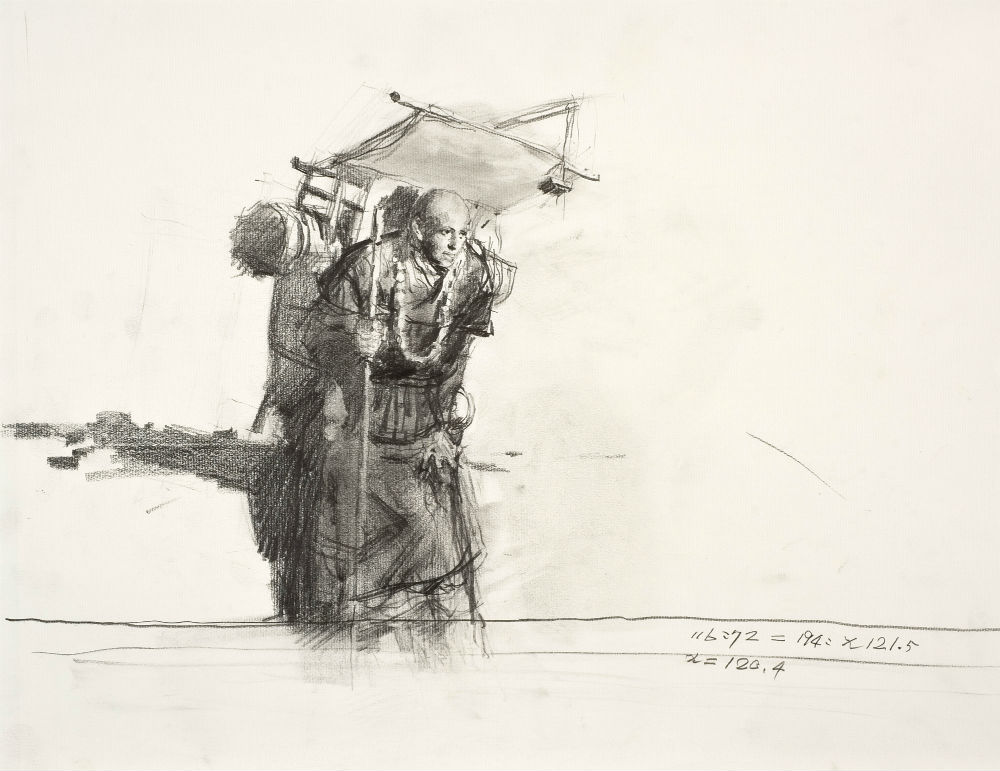
Sketching allows ideas to be explored through studies and small drawings without falling into the habit of relying on photos. The large number of pencil sketches drawn by Repin is clear proof of this.
Sketching also trains our reflexes and judgment; it hones the observation of the eyes and drawing skills of the hand as well. Basically, there are just too many benefits to be summarized here.
In the next post, we will discuss how to develop and hone sketching skills.