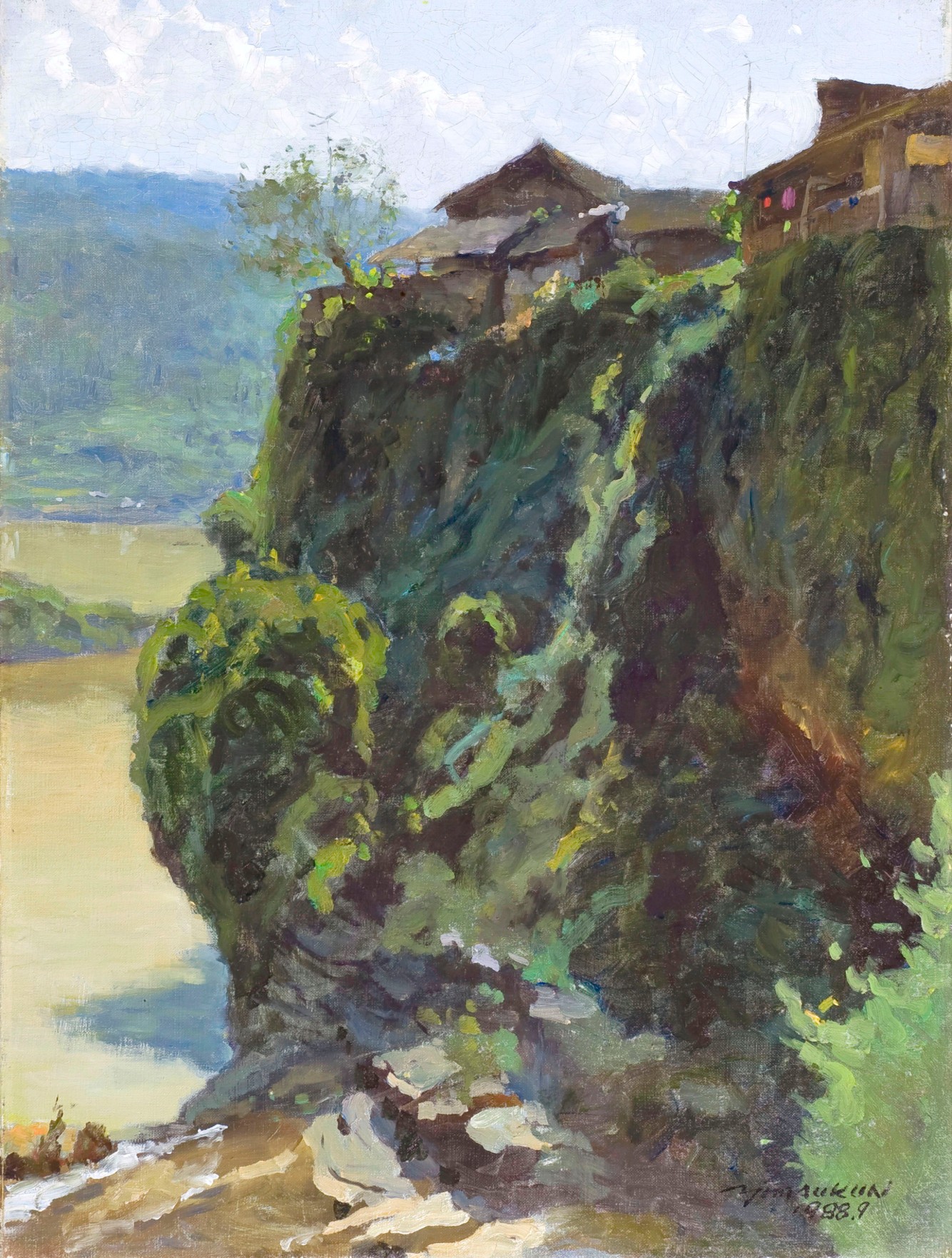
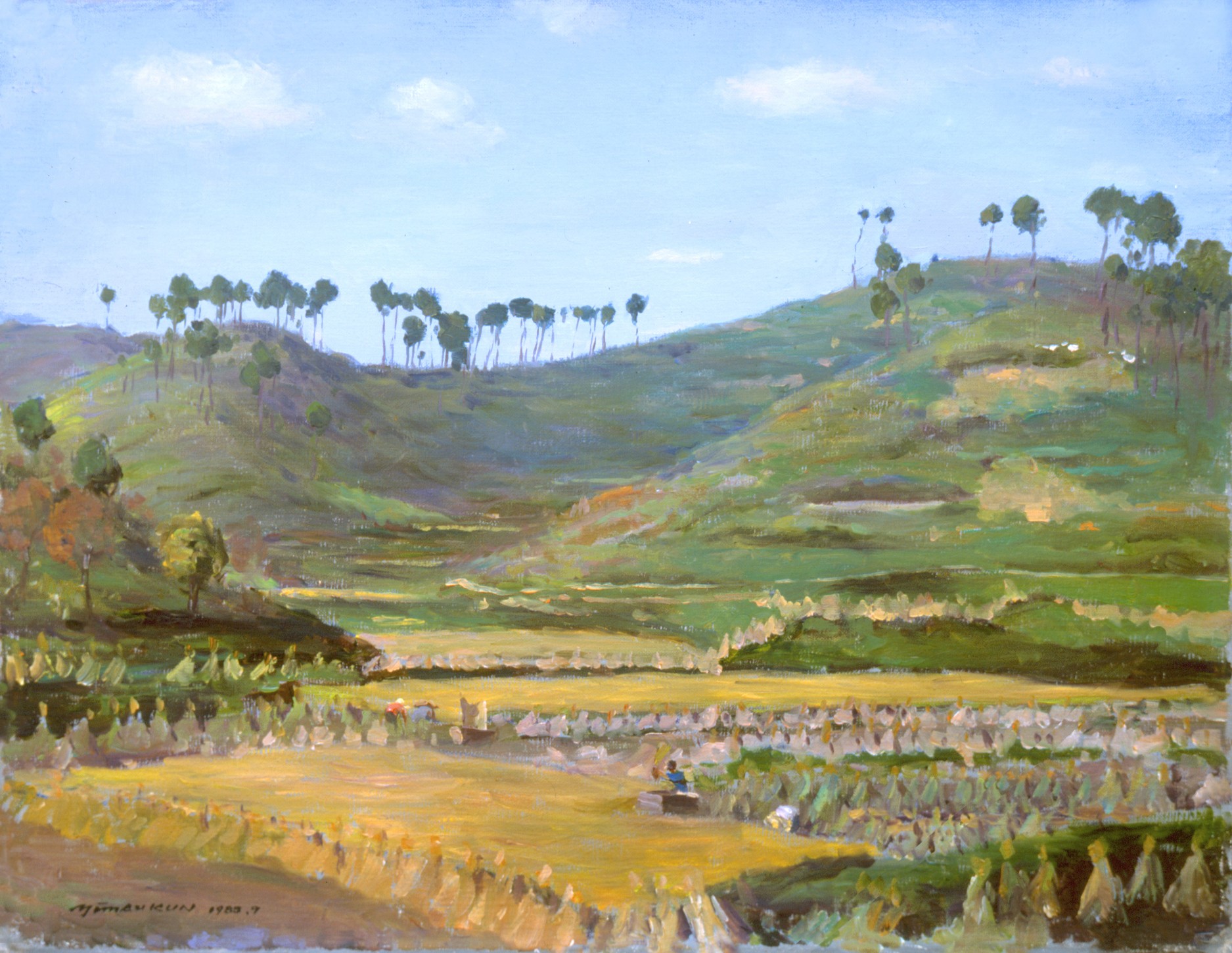
I was born in Taoyuan County on the banks of the Yuan River in Hunan. and I grew up in Changde, Xiangxi. I’ve yearned to go back and visit for many years. I also wanted to visit Fenghuang and Chatong in search of my youthful memories and see the sights and sounds that Shen Congwen wrote about. In the fall of 1988, I finally traveled with three young painters from Hong Kong to Xiangxi for a plein-air painting trip.
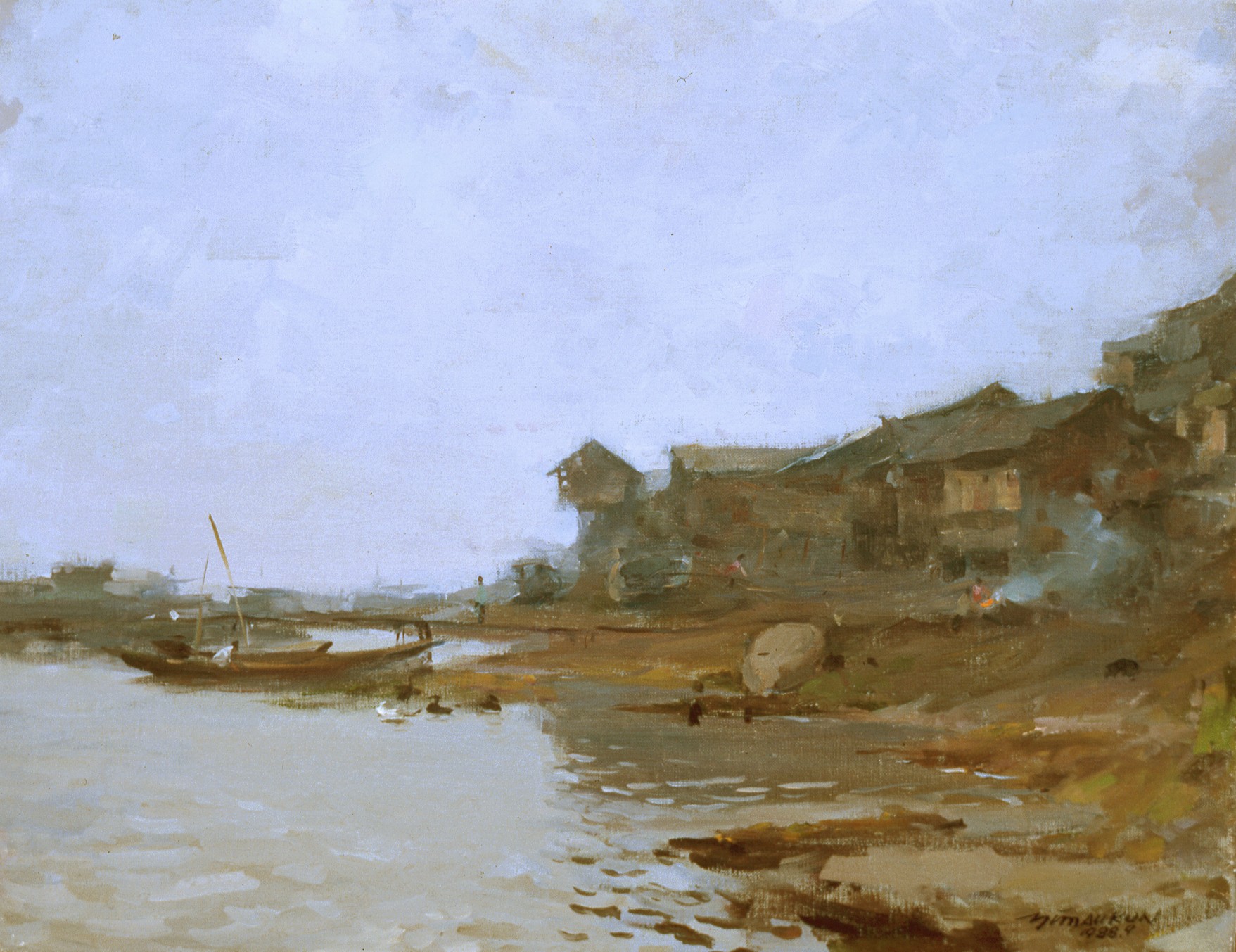
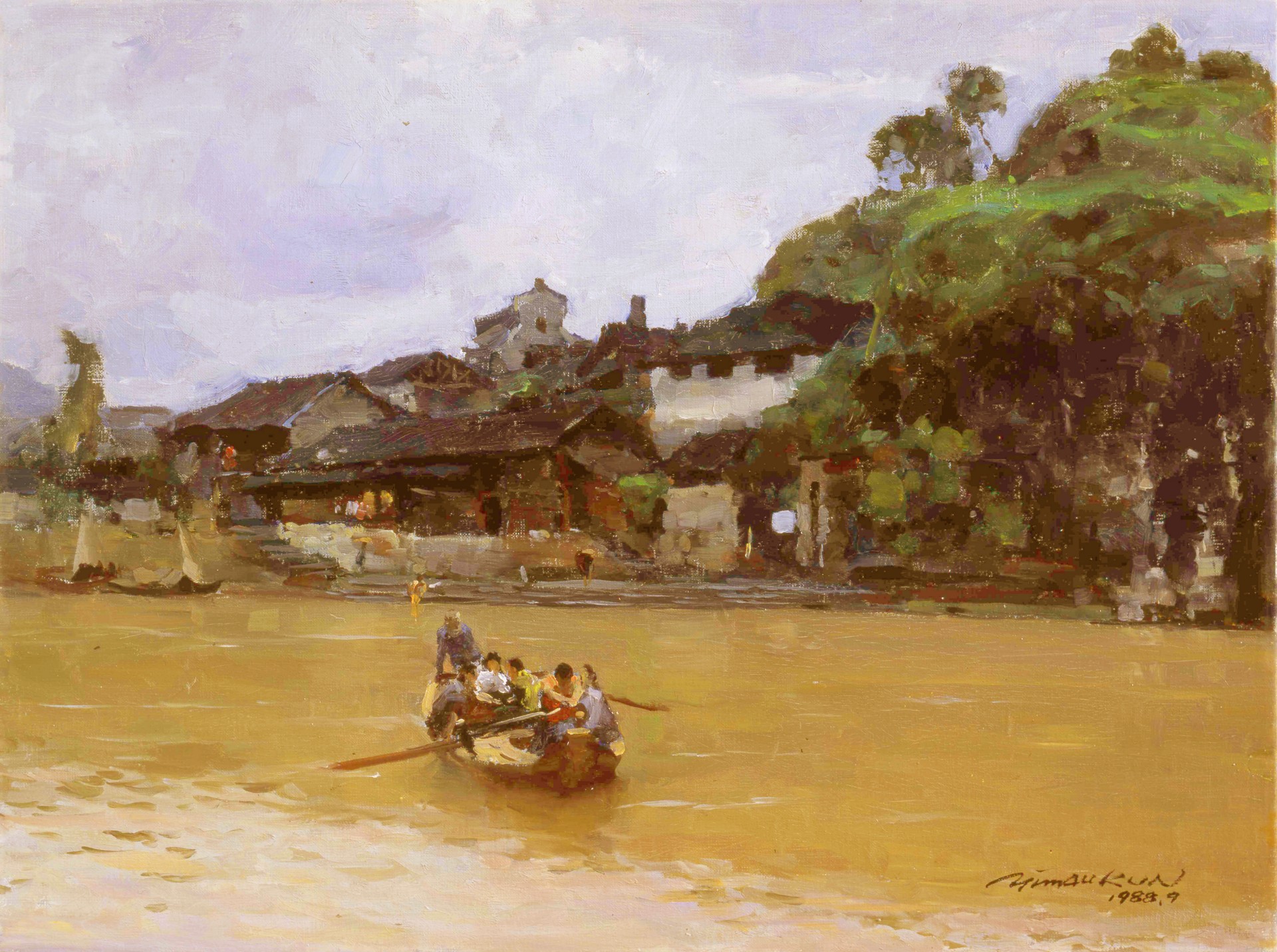
By the Yuan River (Yuanling, Hunan) 16×21 inches 1988
Jishou is the capital of Xiangxi and was once known as Suoli. Today, it is the political, economic and cultural center of Tujia and Miao Autonomous Prefecture. There are large and small factories everywhere in the city and there is a layer of dust over everything. The dusty roads, the piles of sweet potatoes on the roadside, the honking of car horns as well as young girls with shoulder-length hair dressed in the latest fashions create an interesting urban composition. The only hint that you are in Xiangxi is the occasional woman in traditional Miao headdress and clothing. It is a Xiangxi that has felt the touch of reforms and liberalization.
Light rain greeted us when we reached in Aizhai. We took an old and dilapidated bus that slowly crawled its way up to the precarious Aizhai Highway and stopped at a small privately-owned roadside diner to enjoy Xiangxi’s famous tender tofu before continuing on to Chatong Town.
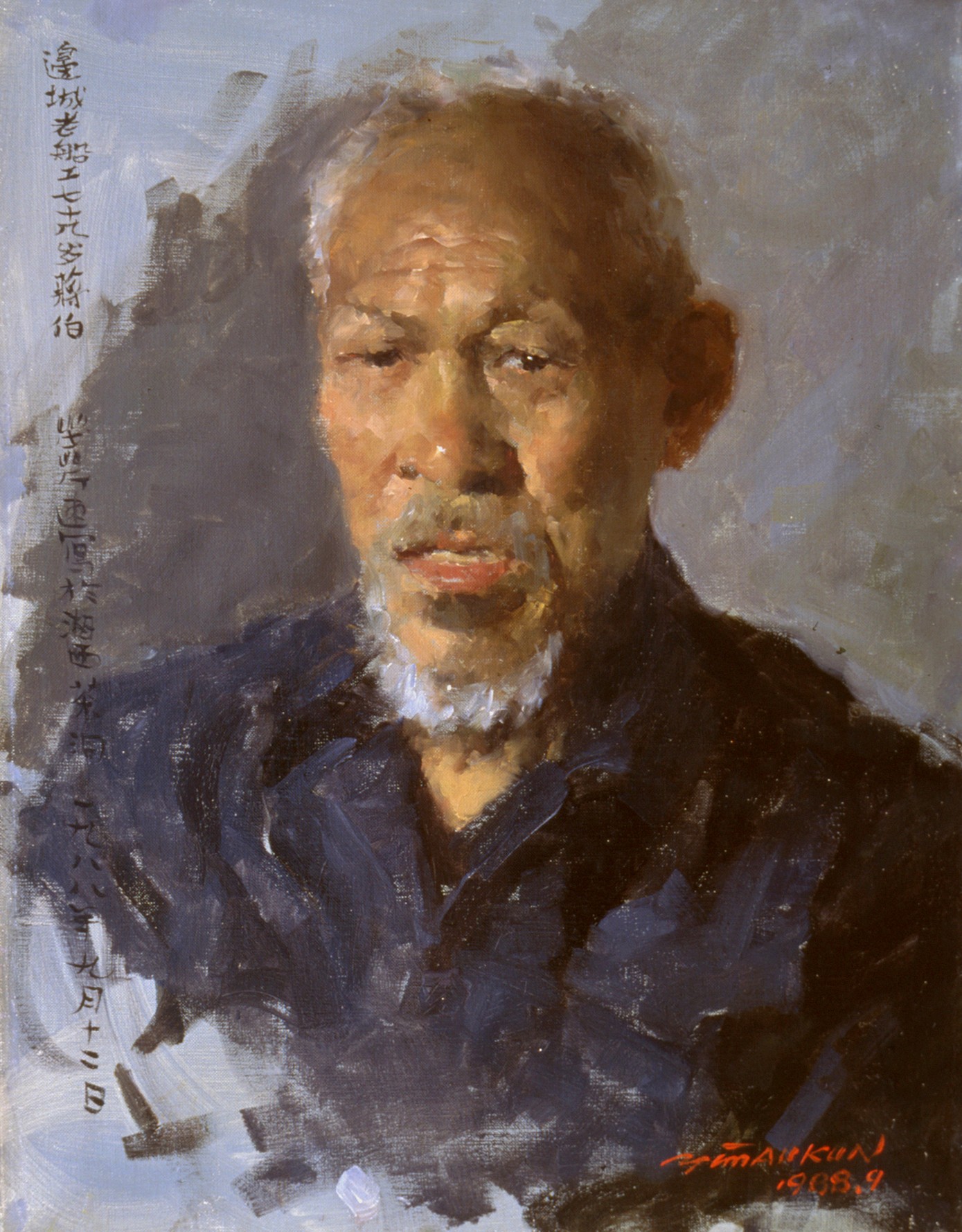
Chatong owes its fame to The Border Town, a novel written by Shen Congwen that is considered his representative work. The three provinces of Hunan, Sichuan and Guizhou come together at Chatong. A mix of Han, Miao and Tujia make up the town’s population of nearly twenty thousand and it was once known as “Little Nanjing.” Most of the older generation still remember the old boatman that Shen Congwen wrote of. They also know that Cuicui was Ms. Yu and that she wore hair long instead of in a braid. After the oldest and second oldest sons died in Changde when their boat capsized, Ms. Yu’s stilt house was also washed away in a flood. She is said to have to married someone in Chengdu and has not been back ever since. We came across Jiang Bo, the old boatman, right away when we arrived at the Hong’an ferry landing in Chatong. He was in good health and had white hair – the spitting image of Cuicui’s grandfather and old boatman in Border Town. During our chat with him, we learned that he and Old Yu were both Chatong ferrymen. Yu lived about a mile downstream while he has always stayed at Hong’an. More than fifty years have gone by but he still remembered everything quite clearly.
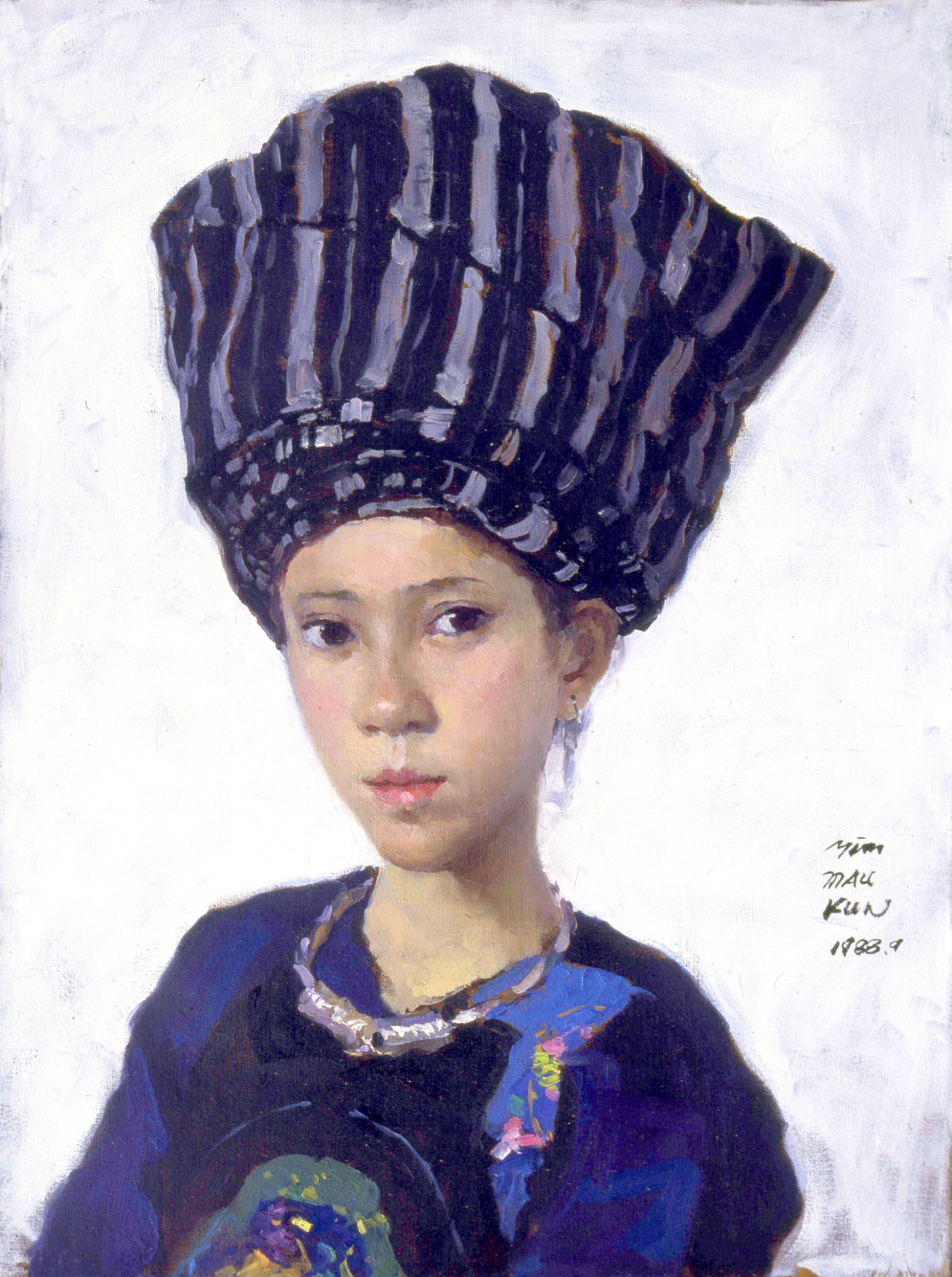
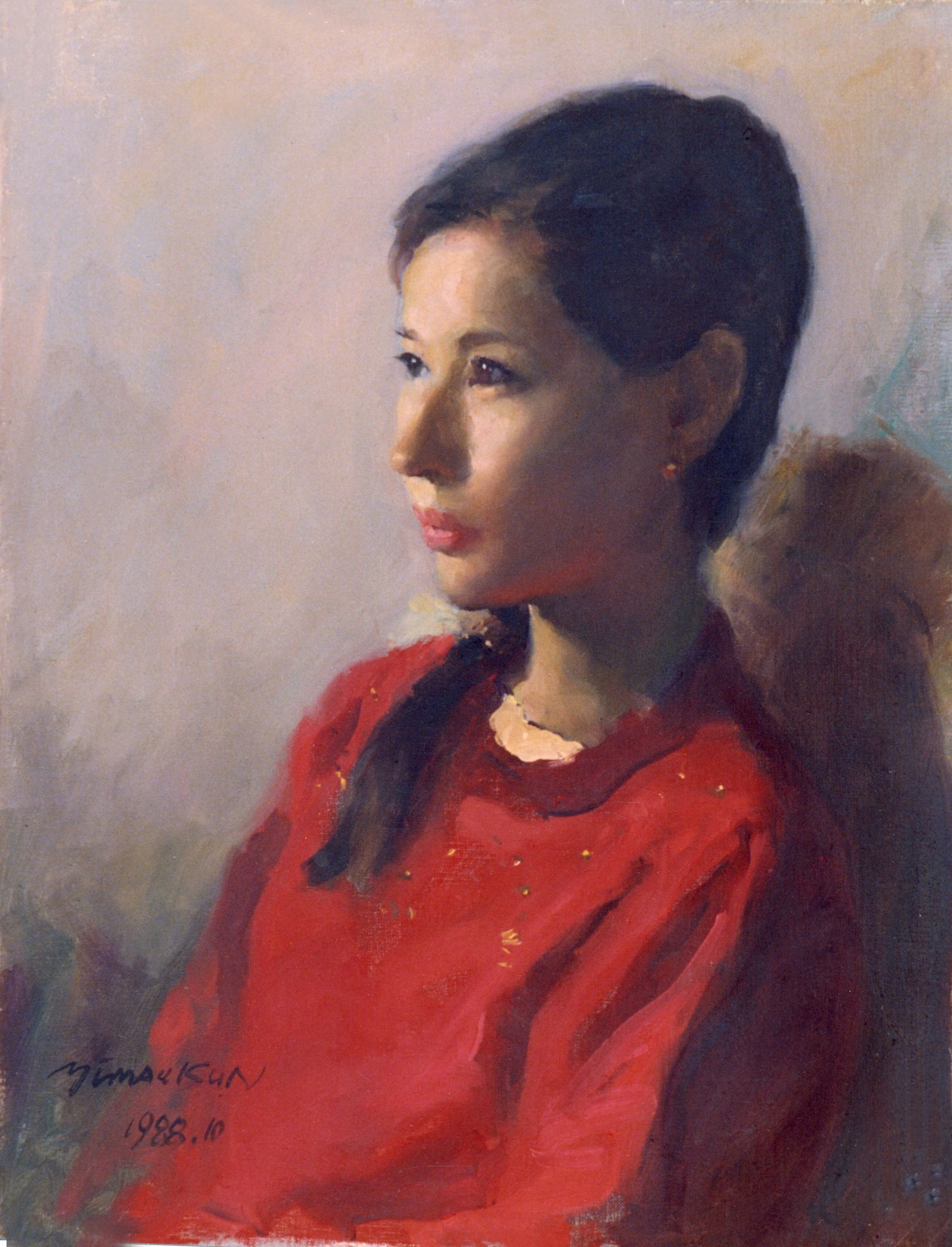
Finding Cuicui. When we arrived in Chatong our group decided to find someone to model “Cuicui” for us but our search was unsuccessful. Eventually, third brother find a girl named Liu and asked her if she looked like Cuicui. Liu had long hair and wore a red top. She also wore long pants and high heels that gave her a modern, youthful look. She wasn’t shy or reserved like Cuicui in the novel either but she was a local Chatong girl. I could only sigh after the painting session – Cuicui was unique after all.
Fenghuang was an important stop in our plein-air painting trip. It is Sheng Congwen’s home town and also home to the famous Tujia painter Huang Youngyu. Huang is a great fan of the town probably because it still retains many of its rustic stilt houses and old gatehouse. What I discovered was that the town has become a popular painting destination for art students and teachers in China in recent years. That was why a kind old lady came up to me while I was painting the city gate and said: “Two or three days go by at most between people painting this gate house.” She turned out to be an aunt of Huang Yongwu. People have gotten used to all the young artists and teachers coming here plein-air painting in the last few years. It gives them a sense of pride and enthusiasm for Fenghuang.
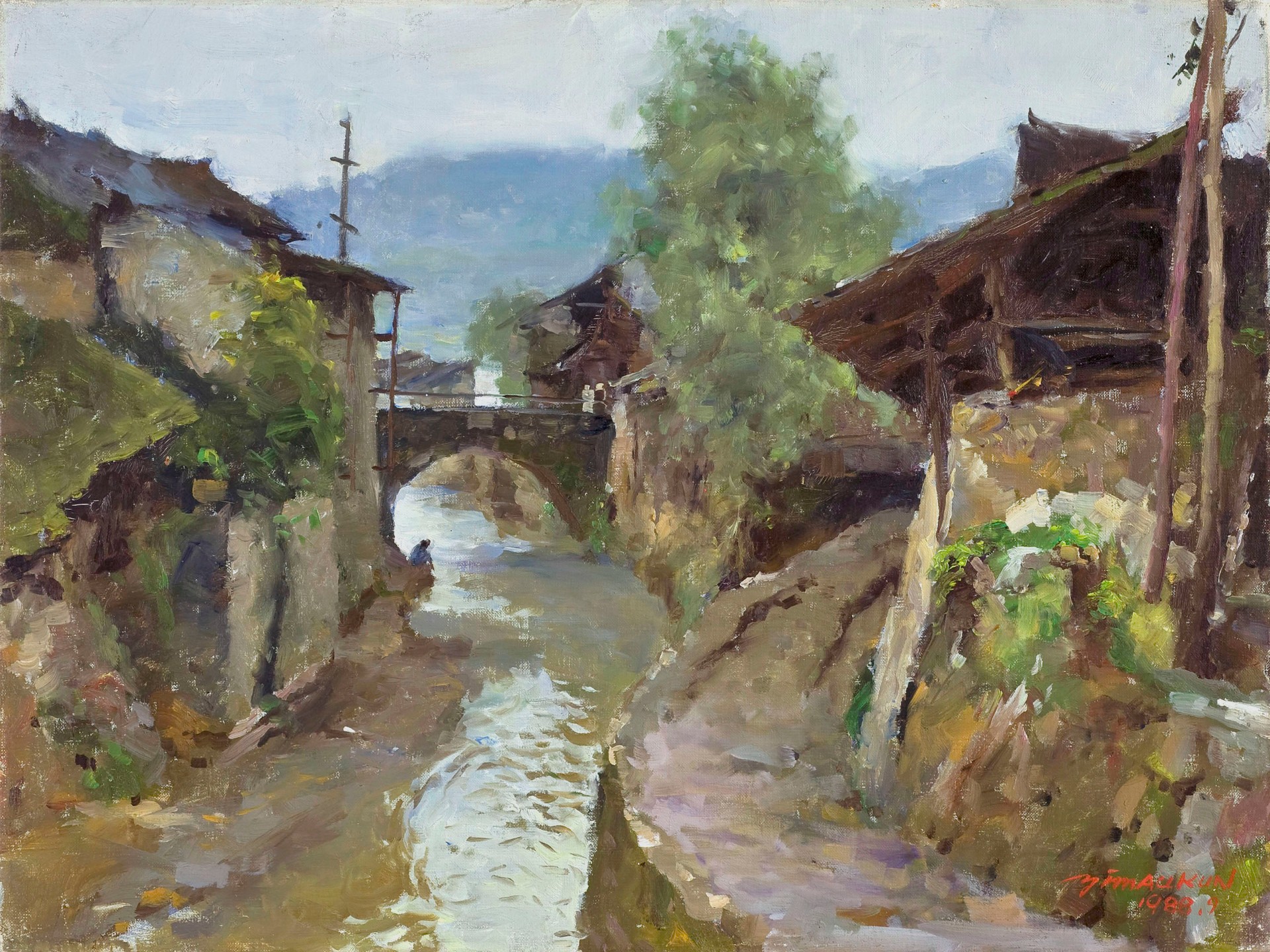
Chadong Bridge (Huaheng County, Hunan) 18×24 inches 1988
Fenghuang was named Tuojiang Township because the Tuo River winds its way around the town. We made a pilgrimage to the former residence of Shen Congwen at No. 24, Zhongying S. in Tuojiang Township. The wooden front doors have just been re-installed and have not yet been varnished. There are two side rooms right inside the front door, followed by an open-air courtyard with more side rooms. Beyond that lay the main hall with two more large side rooms. A flight of wooden stairs beyond the central hall led to the second floor, while the kitchen and storeroom lay at the back of the house. The carved wooden grating in the main hall looked a little old and worn. Shen’s sister-in-law is named Luo Lan and she is the custodian of the house. Though she was in her seventies, she was quite spry for her age and had a refined, educated demeanor. She said the house was being restored and should be re-opened to the public in April or May next year.
The people in this town have lived a more natural and relaxed life over the past few decades. The climbing costs of living as well as pop songs and jeans from Taiwan and Hong Kong seem to have caught them a little off-guard. They stubbornly insist on speaking to everyone in a thick Xiangxi accent and cover every dish with crimson chili. All of the older people in the town miss the fifties with its stable prices. They had a favorable view of the Communist Party ‘s bandit hunting efforts. Unfortunately, more than forty historic buildings in the city were destroyed or fell into disrepair. The past was therefore falling apart and nobody could be certain of what will happen in the future. The regular announcements for policy education over the town’s public address system seemed to be the only reminder that the “old days” are now gone.
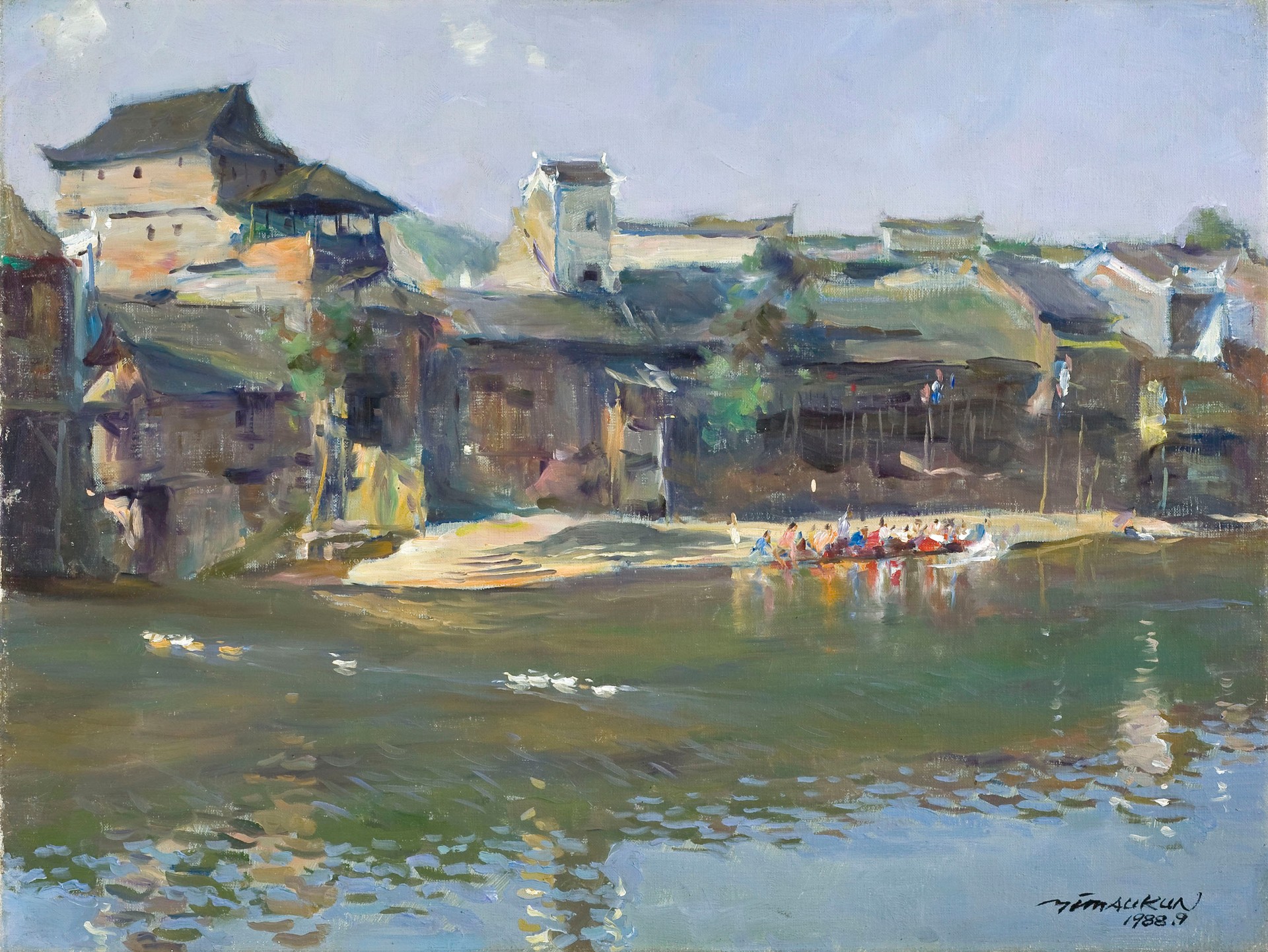
Washing Clothes by the River (Fenghuang City Hunan) 18×24 inches 1988
Nobody here knew much about “corpse driving” (a local custom of delivering the corpse back to the dead’s hometown) or “cave spirits” (local legend about young women whose souls being stolen by cave spirits). Only the tradition of antiphonal singing between young Miao men and women continued to thrive. I still remember how Miao couples sang to each other in the fields by the light of dusk after the end of the Jiangshan market. A former soldier in the village told me that by Miao custom, the men and women would greet and chat with each other first. They only move on to antiphonal singing if they see eye to eye. The circumstances of both parties are communicated through singing, and marriage may then happen after that. When we went to the Miao homeland at Laershan later on, we heard three couples singing to each other. I rushed out with a torch but there was nobody to be seen. There was only a faint song in the air that faded into the night.
(Originally published on November 19, 1988, on page 8 of China Evening Times)